You have the pad. Now what?
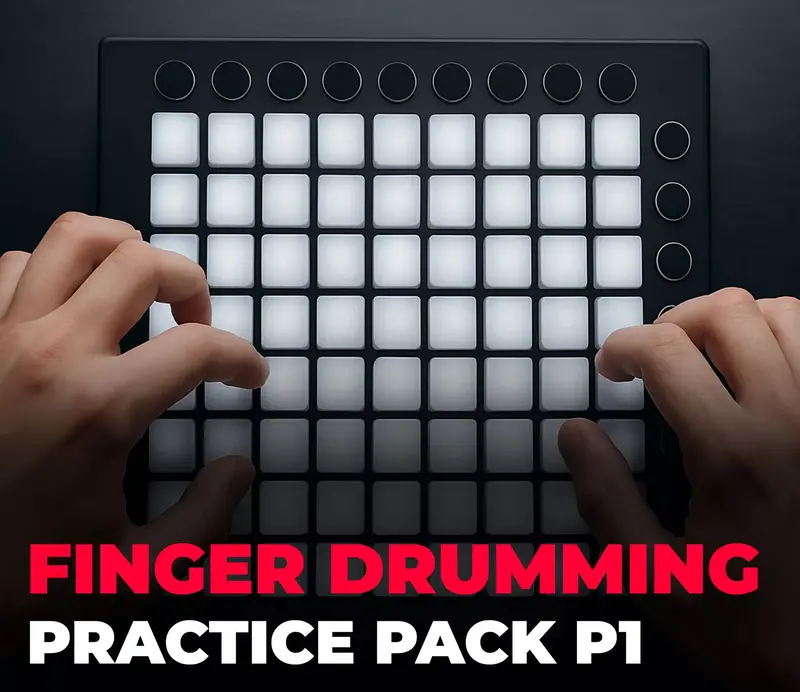
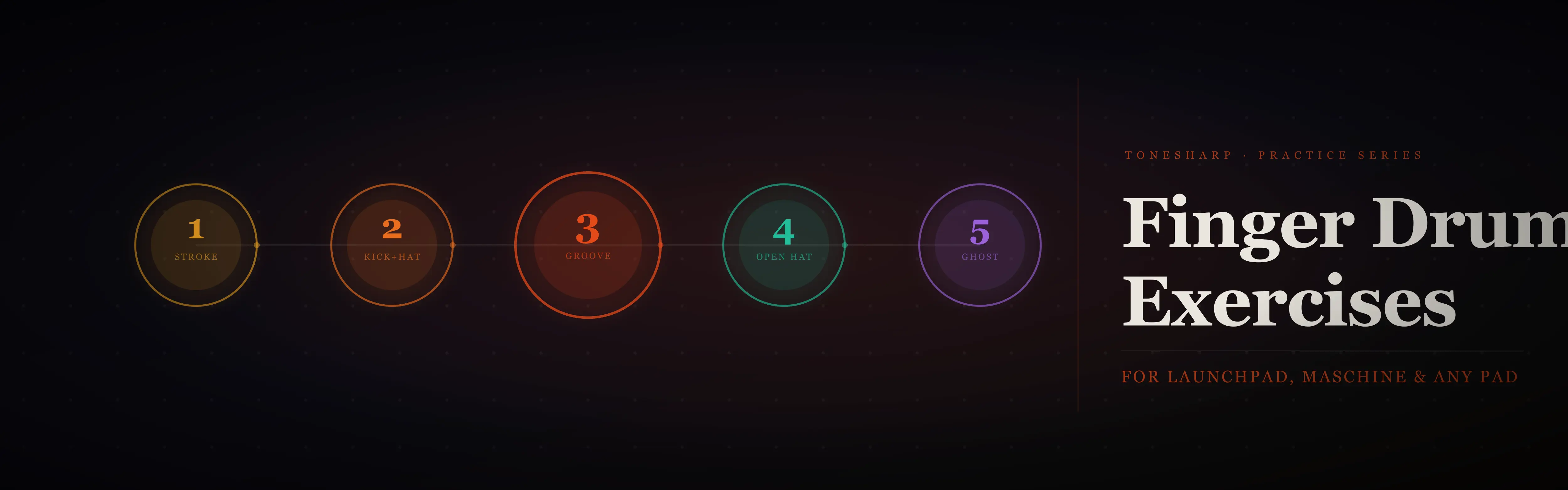
Most people open their Launchpad or Maschine, tap a few pads, make something vaguely beat-shaped, and then stall. Not because they aren't trying — because nobody showed them which finger drumming exercises for beginners actually build the right foundations. These five do. Launchpad finger drumming exercises, Maschine patterns, or any pad controller — the layout is the same. Work through them in order. Thirty minutes is enough to get through all five at a basic level.
What's Inside This Guide
Your Pad Layout

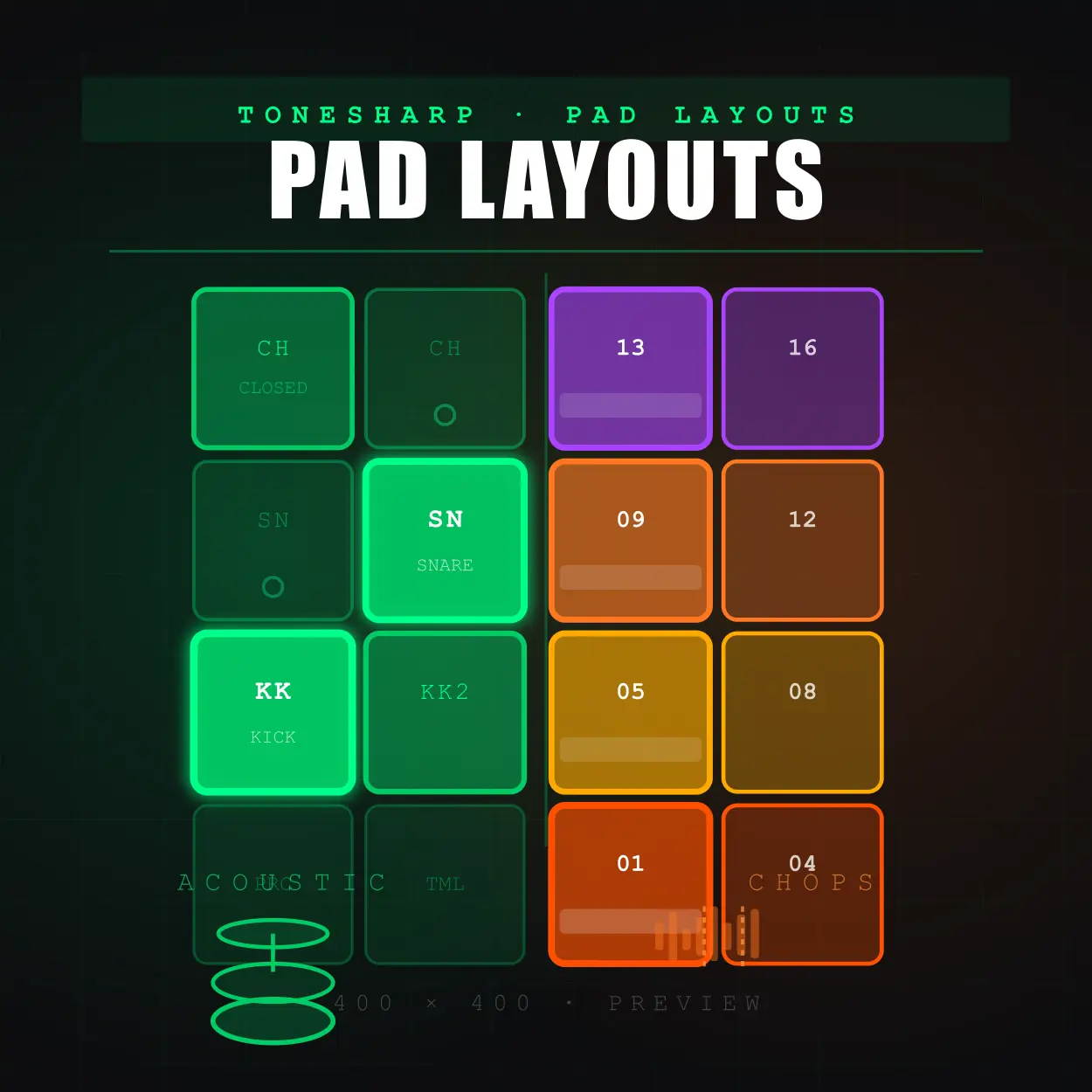
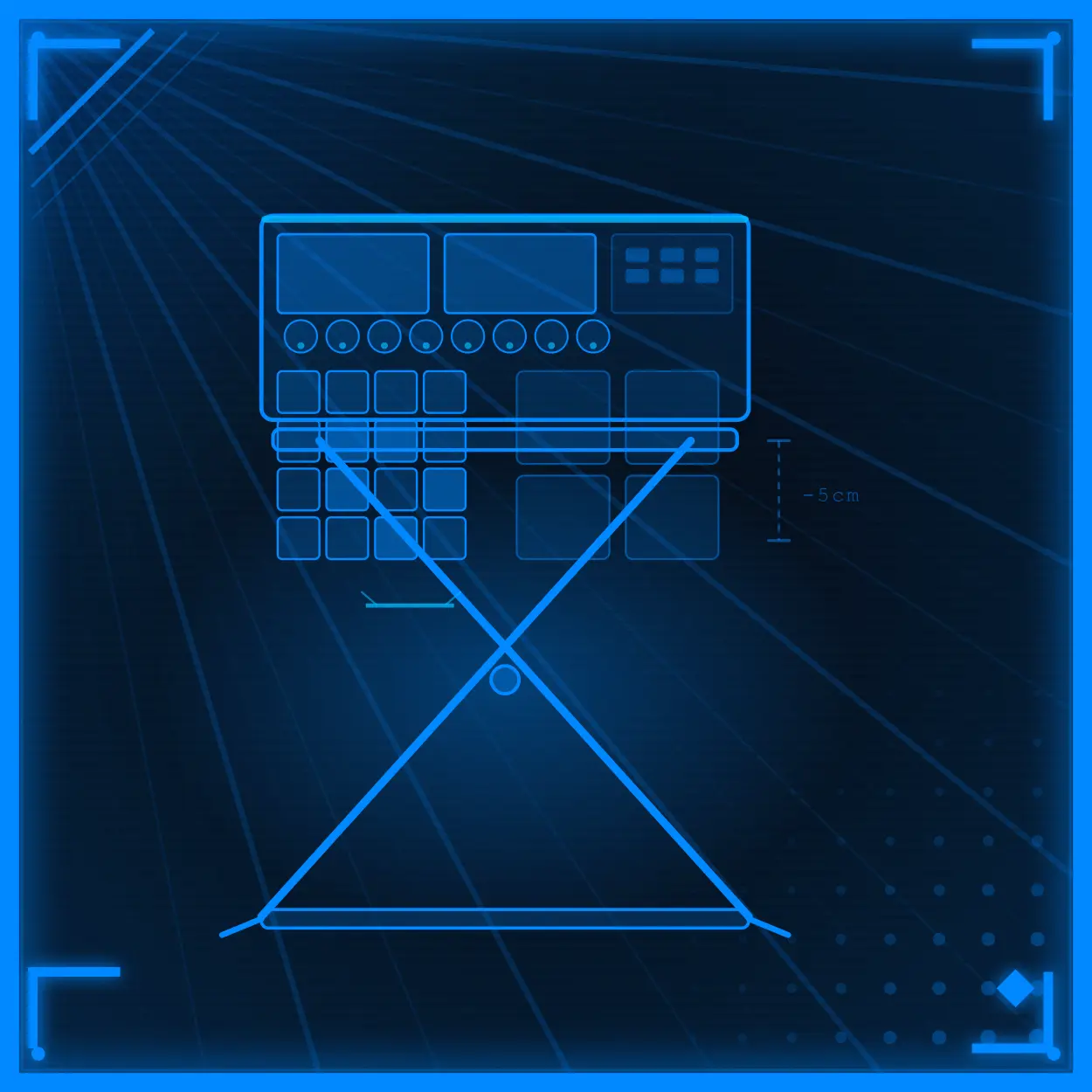
Before any pad controller exercises, assign your four core sounds. All five exercises below use the same layout.
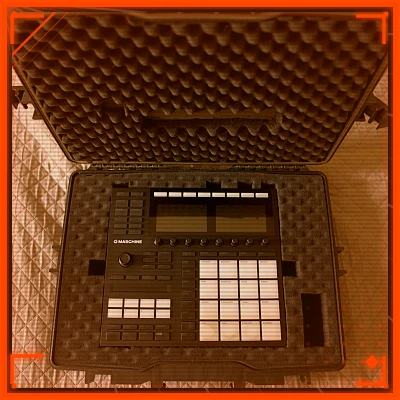
On Maschine, finger drumming starts with pad 1 as kick, pad 2 as snare, pad 3 as hi-hat, pad 4 as open hi-hat. Maschine finger drumming groups make this a 60-second setup.
On Launchpad, finger drumming exercises map to the grid the same way: bottom row for kick, then snare, and hi-hat.
In the pad-player below:
- PAD1 = kick (bottom)
- PAD2 = snare
- PAD3 = hi-hat (closed)
- PAD4 = open hi-hat or ghost snare
Set it once, use it for all five pad controller exercises that follow.
Exercise 1: Single-Stroke Roll

What it builds: Even velocity and hand independence. Your non-dominant hand almost certainly hits quieter and later than your dominant hand. This exercise reveals that gap and closes it.
How to do it: Right hand, left hand, right hand, left hand — one hit per count, same pad, 60 BPM. Both hands hitting with the same force. If you closed your eyes and heard a recording back, could you tell the difference between left and right hits? If yes, keep working here.
The single-stroke roll is the foundation of all launchpad finger drumming exercises and every other exercise in this list. If this is uneven, nothing built on it will hold.
Start at 60 BPM. Run for 3 minutes before moving to Exercise 2. See the Rudiments Part 1 post for more progressions.
💡 Common Mistake: The dominant hand always hits harder. Train the weaker hand up to match it — softening the strong hand creates a timid groove, building the weak hand creates a powerful one.
Exercise 2: Kick and Hi-Hat Together

What it builds: Kick/hi-hat coordination — the hardest thing for most beginners to crack. Two independent sounds running simultaneously from two different fingers.
How to do it: Right index on PAD3 (hi-hat, 8th notes every beat), left thumb on PAD1 (kick on beats 1 and 3). The hi-hat runs continuously. The kick lands underneath it without disrupting the hi-hat’s rhythm.
On Maschine, finger drumming with two independent fingers on different pads is the first moment the controller behaves like a drum kit. On Launchpad the same applies — hi-hat finger never stops, kick finger enters underneath.
If it feels impossible, drop to 40 BPM. The hi-hat hand must not flinch when the kick fires. Once clean at 40 BPM, move to 50, then 65. For Maschine finger drumming setup tips, the Maschine MK3 tutorial video at the top of this post walks through pad assignment in detail.
Exercise 3: Adding the Snare on 2 and 4

What it builds: The basic groove skeleton — the three-element pattern every style of popular music in the last 70 years is built on in some form.
How to do it: Hi-hat on every 8th note, kick on beats 1 and 3, snare on beats 2 and 4. Three simultaneous elements, each autonomous. The snare must not rush the hi-hat. The kick must not drag the snare.
This is one of the most important finger drumming exercises for beginners because it is the first time you are playing an actual groove. Work through it using the 15-minute practice routine: kick alone first, then kick and snare, then add hi-hat.
Start at 75 BPM. Once clean, push to 85, then 95. Ten consecutive clean reps before moving up.
Exercise 4: Open vs Closed Hi-Hat

What it builds: Groove feel and dynamics. A groove where every hi-hat sounds identical is immediately identifiable as beginner work. Open vs closed hi-hat is the fastest single upgrade to any pad controller exercise that already has a basic groove running.
How to do it: Same three-element groove from Exercise 3, but on the “and” of beat 2 (step 7) and “and” of beat 4 (step 15), the closed hi-hat is replaced by open hi-hat (PAD4). The open hat sustains, creating air and space in the pattern.
At 80 BPM. The open hat on PAD4 replaces the closed hit at those positions — they don't stack. For more hi-hat sound variety, the free demo pack below includes additional samples you can swap in.
Exercise 5: Ghost Notes on the Snare

What it builds: Realism and groove depth. Ghost notes on the snare are the quiet snare hits that professional drummers layer underneath the main backbeat. Most listeners cannot consciously identify them — they feel the groove is richer and more human. That feeling is the ghost layer working.
How to do it: PAD4 carries ghost notes at 20–30% of your normal snare velocity on the “e” of beat 1 (step 2) and the “e” of beat 3 (step 10). The kick has also shifted to beat 1 and the “and” of beat 2, adding syncopation.
Ghost notes on the snare transform a basic groove into something that sounds like a real drummer played it. For deeper syncopation work, see the Week 1 fundamentals post.
At 80 BPM, ghost hits at 20–30% velocity. If a listener can hear the ghost notes clearly, they are too loud. PAD4 hits are a whisper compared to PAD2.
🎁 Free Practice Pack
All five exercises — plus 12 more — are in the free practice pack below, with sheet music, MIDI files with exact velocity programmed, and Ableton and Maschine templates pre-loaded with the correct sounds.
Download Free Finger Drumming Fundamentals — drop your email and it’s yours instantly. If you want more structured lesson packs beyond the fundamentals, the full catalogue of Free Finger Drumming Lessons
Related
- 15-Minute Finger Drumming Practice Routine
- Week 1 — First Week of Finger Drumming
- Week 2 — Warm-Up and Beginner Beat Patterns
- Rudiments Part 1 — Core Exercises
- Intro to Metronome Exercises - Train Your Inner Pulse
- Realistic Finger Drumming Groove Series
Five exercises. One pad layout. Start at the top and work down.
— ToneSharp