🎯 Changes in your temporal perception this week
By now, your practice has stopped feeling like isolated exercises. You began by understanding what finger drumming actually is, then learned how to prepare your hands and build control. By week three, your hands stopped moving as a single unit. Syncopation appeared. Grooves began to breathe.
Week four builds on that moment and shifts the focus inward. Instead of reacting to constant hits, you start *feeling where time lives* between them. This is where timing control, intentional syncopation, and dynamics separate pattern-playing from groove.
What changes this week:
- You stop relying on constant hits to locate time. Removing downbeat hi-hats forces you to internalize the pulse instead of leaning on it.
- Syncopation becomes deliberate. Off-grid kick placement trains trust in rhythmic intention rather than accidental variation.
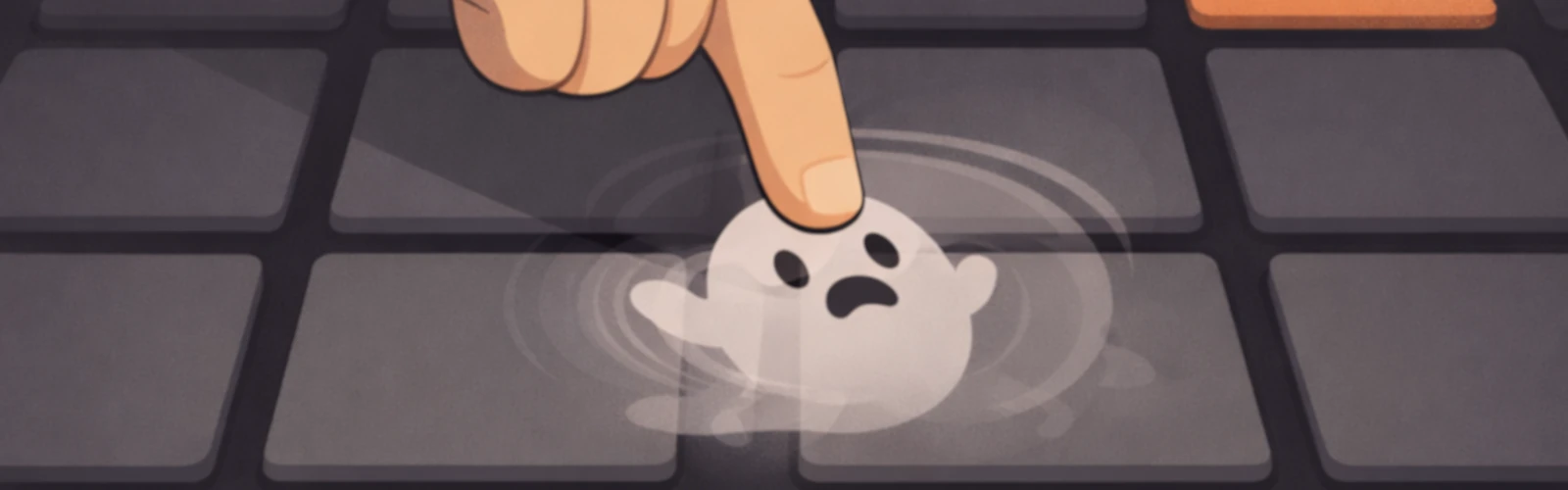
- Ghost notes introduce human depth. Quiet, unaccented hits add texture, weight, and movement without adding complexity.
These are not flashy techniques. They are the difference between grooves that feel alive and ones that sound permanently quantised, no matter how fast or complex they become.
This is the point where timing honesty, musical sensitivity, and rhythmic awareness begin to align.
What's Inside This Practice Guide
🎯 Week 4 Warm-Up: Dynamic Control Drills

Before diving into ghost notes and syncopation, spend 3-5 minutes on these drills. They prepare your fingers for the dynamic control required this week.
Drill 1: Accent Control Exercise
Alternate between loud and soft hits on the same pad. This builds the finger control needed for ghost notes.
What you're doing: Play PAD2 (Snare) with alternating dynamics: loud-soft-loud-soft.
Which finger does what:
- PAD2 (Snare): Index finger, left hand
What to focus on:
- Loud hits should be firm and clear—strike with confidence
- Soft hits should be barely audible—use minimal finger travel
- Keep the timing perfectly even regardless of volume
- Don't tense up on loud hits or lose control on soft ones
- Your finger should barely lift off the pad for ghost notes (1-2mm)
Practice this for 2 minutes. When the contrast between loud and soft feels natural, you're ready to move on.
💡 Real Talk: This drill feels simple, but it's exposing a critical skill gap. Most beginners can only play one volume. This exercise teaches your fingers to have range—and that's what makes grooves feel human.
Drill 2: Off-Beat Coordination
Train your hands to feel the "&" without downbeat anchors.
What you're doing: Left hand plays quarter notes on PAD1. Right hand plays only on the "&" on PAD3.
Which finger does what:
- PAD1 (Kick): Middle finger, left hand
- PAD3 (Hi-hat): Index finger, right hand (only on the "&")
What to focus on:
- The right hand hits fall exactly between the left hand quarter notes
- Count out loud: "1-AND-2-AND-3-AND-4-AND"
- Don't let the right hand drift toward the downbeat
- Keep both hands relaxed—no tension in either wrist
Practice for 2 minutes, then switch hands. When you can do this with either hand leading, your coordination is solid.
💡 Common Problem: If the hi-hat keeps landing with the kick instead of between beats, you're not internalizing the subdivision. Slow it way down and count out loud until the placement becomes automatic.
🥁 What Ghost Notes Actually Do
Ghost notes are quiet, unaccented hits that fill the space between your main groove. They don't carry the rhythm—they support it.
When you listen to live drummers, the snare doesn't just hit on 2 and 4. There are subtle taps in between—barely audible, but they create forward motion and texture. That's what ghost notes do.
Why they matter:
- They make quantized patterns feel human. Without dynamics, every hit sounds robotic. Ghost notes add variation and breathing room.
- They develop touch control. Playing soft notes cleanly is harder than playing loud ones. This builds precision.
- They teach you to hear layers. Music isn't just accents—it's the relationship between loud and soft, strong and subtle.
How to Actually Play Ghost Notes
Ghost notes aren't just "quieter hits." They require a different finger technique:
- Use less finger travel. Your finger barely lifts off the pad—maybe 1-2mm instead of the usual 5-10mm.
- Strike with the fingertip, not the pad of your finger. This creates a lighter, more controlled touch.
- Let the pad rebound naturally. Don't press into it or "dig" for volume.
- Think "tap" not "hit." Ghost notes are felt more than heard.
- The motion comes from the finger joint, not the wrist. Minimal movement creates minimal sound.
💡 Real Talk: If your ghost notes are as loud as your accents, you're not playing ghost notes—you're just adding more hits. The whole point is contrast. Soft touches create space. Loud hits create impact. You need both.
🎯 Three Grooves That Build Real Musical Control
Each groove this week isolates one core skill: timing control, advanced syncopation, and dynamics. Master these, and you've built a legitimate intermediate foundation.
Beat 1: Off-Beat Hi-Hat Groove (Timing Control)
This groove removes the hi-hat from every downbeat and puts it only on the "&". That forces you to feel time internally instead of relying on constant hits to keep you locked in.
What this beat trains: Internal pulse, relaxed right hand, groove consistency without crutches.
Which finger does what:
- PAD1 (Kick): Middle finger, left hand
- PAD2 (Snare): Index finger, left hand (on 2 and 4)
- PAD3 (Hi-hat): Index finger, right hand (only on the "&")
What to focus on:
- The hi-hat lands between the kicks, not with them
- Don't let your right hand tense up trying to find the timing
- Count out loud: "1-AND-2-AND-3-AND-4-AND" until the placement feels automatic
- Your left hand stays locked—it's your anchor while the hi-hat floats
Loop this for 2 minutes without stopping. If the hi-hat timing drifts or feels rushed, slow the tempo down until it locks in naturally.
Practice Progression:
- Day 1-2: Loop at 60 BPM until comfortable (5 minutes daily)
- Day 3-4: Increase to 70 BPM (5 minutes daily)
- Day 5-7: Target tempo with no mistakes for 2 minutes straight
💡 Common Problem: If you keep missing the "&", you're probably not counting. Your brain wants to put the hi-hat on the downbeat because it's easier. Resist that. Count it out loud until your hands learn the rhythm.
Beat 2: Syncopated Kick Groove (Hand Independence)
This groove pushes the kick further off-grid. The kick on the "& of 1" creates forward motion and demands real separation between your hands. This is where rhythmic intelligence starts to develop.
What this beat trains: Kick placement on syncopated subdivisions, keeping snare and hi-hat unchanged, trusting rhythm without overthinking.
Which finger does what:
- PAD1 (Kick): Middle finger, left hand
- PAD2 (Snare): Index finger, left hand
- PAD3 (Hi-hat): Index finger, right hand (steady eighth notes)
What to focus on:
- The kick on the "& of 1" drives the groove forward—don't rush it or drag it
- Your right hand maintains steady eighth notes no matter what the kick does
- The snare stays exactly on 2 and 4—it's your rhythmic landmark
- If the timing feels off, count: "1-AND-2-and-3-and-4-and"
Loop this until the syncopated kick feels natural. When you stop thinking about where it lands, you've internalized the rhythm.
Practice Progression:
- Day 1-2: Start at 60 BPM, focus on kick placement (5 minutes daily)
- Day 3-4: Increase to 70 BPM (5 minutes daily)
- Day 5-7: Hit 75 BPM cleanly for 2 minutes straight
💡 Real Talk: This groove exposes weak hand independence fast. If your right hand wants to follow the kick pattern instead of staying steady, slow it way down and practice just the right hand alone until it becomes automatic.
Beat 3: Ghost-Note Groove (Dynamic Control)
This is the Week 4 capstone beat. Ghost notes fill the space between accented snare hits, creating texture and human feel. This groove teaches you to control dynamics, not just rhythm.
What this beat trains: Touch control, dynamic contrast, musical phrasing.
Which finger does what:
- PAD1 (Kick): Middle finger, left hand
- PAD2 (Snare): Index finger, left hand (accents on 2 and 4, ghost notes in between)
- PAD3 (Hi-hat): Index finger, right hand (steady eighth notes)
What to focus on:
- Strong accents on 2 and 4. These are your loudest hits—they define the backbeat.
- Very light ghost snare hits. These should be barely audible. If they're as loud as your accents, you're not doing it right.
- Even hi-hat flow. Your right hand stays consistent while your left hand varies dynamics.
- This groove requires finger control, not just timing. Play the ghost notes with minimal force.
- Ghost notes should be 10-20% of accent volume—extreme contrast is the goal.
Loop this for 2 minutes straight. When you can maintain consistent dynamics without thinking, you've developed real control.
Practice Progression:
- Day 1-3: Start at 60 BPM, focus solely on ghost note volume (5 minutes daily)
- Day 4-5: Increase to 70 BPM, maintain dynamics (5 minutes daily)
- Day 6-7: Hit 80 BPM with perfect dynamic contrast for 2 minutes
💡 Common Problem: If everything sounds the same volume, you're hitting too hard on the ghost notes. The whole point is contrast. Loud hits create impact. Soft touches create space. You need both to make the groove feel human.
How These Three Grooves Work Together
Each beat this week isolates one critical skill, but they're designed to build on each other:
- Beat 1 builds timing honesty. You can't fake internal pulse when there's no constant hi-hat to lean on. This is the foundation for everything else.
- Beat 2 builds rhythmic intelligence. Syncopation stops being a trick and becomes intentional placement. You're now thinking in subdivisions, not just beats.
- Beat 3 builds musical feel. Dynamics transform patterns into grooves that breathe. This is where you stop sounding like a drum machine and start sounding like a musician.
Together, they form a true intermediate foundation. Not flashy, but absolutely essential. If you can play all three grooves cleanly, you've moved beyond beginner-level finger drumming.
Week 4 Practice Schedule:
- Days 1-2: Focus on Beat 1. Get the off-beat hi-hat locked in. Also practice warm-up drills.
- Days 3-4: Add Beat 2. Work on syncopated kick placement while maintaining Beat 1.
- Days 5-7: Master Beat 3. Refine ghost note dynamics. By day 7, cycle through all three grooves.
By the end of the week, you should be able to switch between all three grooves without thinking. That's when you know the concepts have internalized.
Common Week 4 Challenges (And How to Fix Them)
Challenge 1: Ghost Notes Sound the Same as Accents
The problem: Your dynamics aren't wide enough. Everything sounds at the same volume.
The fix: Practice on just PAD2 with no other sounds. Play 4 loud hits, then 4 ghost notes. The contrast should be extreme—ghost notes should be 10-20% of accent volume. Record yourself and listen back. If you can't hear a massive difference, your ghost notes are still too loud.
Challenge 2: Losing the Pulse on Off-Beat Hi-Hats
The problem: You're not internalizing the beat. You're depending on external cues.
The fix: Use a metronome with a woodblock sound. Practice Beat 1 with the click on all four beats. Once locked in, mute the click and see if you stay in time. If you drift, you're not counting internally. Count out loud: "1-AND-2-AND-3-AND-4-AND" until the subdivision becomes automatic.
Challenge 3: Syncopated Kicks Feel Rushed
The problem: You're anticipating instead of placing. Your brain is trying to predict the rhythm instead of feeling it.
The fix: Slow Beat 2 down to 50 BPM. Count out loud: "1-AND-2-and-3-and-4-and" and emphasize the "AND" after 1. Don't speed up the tempo until the placement feels natural and relaxed. Film yourself from the side—if your hand is tensing up before the hit, you're anticipating. Relax and trust the subdivision.
Challenge 4: Right Hand Gets Choppy During Ghost Notes
The problem: Your left hand dynamics are affecting your right hand timing.
The fix: Practice just the right hand part of Beat 3 alone for 2 minutes—steady eighth notes on PAD3. Then add only the accented snare hits (2 and 4). Finally, add ghost notes one at a time. Build complexity gradually instead of trying to do everything at once.
What You've Actually Built This Week
If you can play Beat 3 with clean ghost notes at 80 BPM for 2 minutes straight, here's what you've developed:
- Internal timing: You don't need constant hits to stay locked in—the pulse lives inside you now
- Advanced syncopation: Off-beat kicks feel natural, not forced—you're thinking in subdivisions
- Dynamic control: Your fingers can play soft and loud intentionally—you have touch, not just technique
- Musical phrasing: Your grooves have texture, not just rhythm—you're creating feel, not just following patterns
That's real progress. You're not just coordinating hands anymore. You're shaping sound.
What's Next?
Week 5 will introduce fills, transitions, and how to break out of the 4-bar loop. But only move forward if you can play all three Week 4 grooves without thinking. Rushing ahead builds bad habits. Master this first.
Don't skip the fundamentals. Don't chase complexity before you have control. The ghost notes, timing, and syncopation you learned this week are what separate intermediate players from advanced ones. Get these right, and everything else becomes easier.
Free Finger Drumming Training Packs for Continued Growth
Want to keep building on what you've learned? These free practice packs give you structured exercises, rhythm variations, and pattern drills that reinforce timing control, syncopation, and dynamics. Whether you're working on rudiments or developing new grooves, these packs help you stay consistent and keep improving.


Grab these free packs, practice regularly, and watch your control strengthen week by week. Consistent practice with the right tools is the fastest way to develop timing, dynamics, and musical feel. Keep playing, stay patient, and enjoy the process of building real grooves.
Stay patient. Stay focused.
— ToneSharp